By: Will Aimette
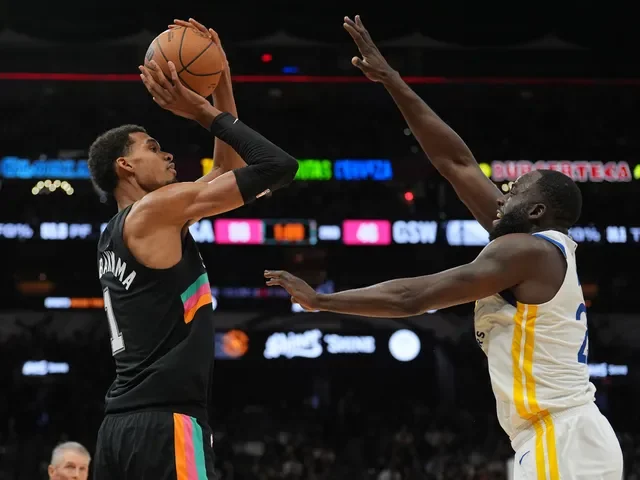
(Image Credit: Sportsmole.co.uk)
As dynasties like the Warriors and Celtics come to an end, new young teams like the Spurs and the Thunder are looking like the next superteams in the NBA. But are these runs of dominance actually valuable for the league? First, let’s define a superteam. A superteam, in my eyes, has to be in Finals contention every year for three years in a row. That means an appearance in the Conference finals every year. Another trait of a superteam is regular season dominance, they have to be the 1 or 2-seeds, and the most obviously dominant team in the NBA. And that doesn’t mean they can only be good record-wise. It means they have a dominant roster, a dominant record, and dominant playoff runs. So with that in mind, let’s evaluate the best dynasties in recent memory. Starting with the 2011-2013 Thunder. They had James Harden, Kevin Durant, Russell Westbrook, and Serge Ibaka, all in their prime. Talk about talent. While this team (somehow) never won an NBA Finals, they had great regular season success, and made three appearances to the Western Conference Finals; this team was feared across the NBA. Although now that Thunder team doesn’t appear the most dominant results-wise, their roster was stacked, they were a perfect example of a superteam. And they got it genuinely, partly through drafting well, then trading for veterans to stack their roster. Their run of dominance provided a spark in the NBA, they were great for the league. Next, the 2014-2018 Warriors. They won three NBA Championships and made four Finals appearances in a row. They had Steph Curry, Klay Thompson, Draymond Green, and Kevin Durant (who seems to be a common denominator). They broke the regular season win record and went 73-9 in 2015-16. It was such a powerful dynasty, it did so much to revitalize the league, and they got that superteam through trading and drafting well, similar to the 2011-2013 Thunder. But now let’s take a look at the superteams emerging in the NBA currently. The Thunder, once again, are back as a superteam. After winning last year’s finals with a dominant run, they were back in the Conference Finals this year, before they lost to the Spurs in Game 7. They were the clear 1-seed in all three years, had the deepest roster in the NBA, and were widely regarded as the best team. As for how they acquired their assets? Although some of their talent was acquired by trade, they blatantly tanked for two seasons. In 2019-2020, they were the 5-seed and were decently talented. The next year? They went an abysmal 22-50, getting the first pick in the draft and selecting Chet Holmgren. The year after? 24-58. This type of dynasty isn’t valuable for the NBA. They’ve set the example for teams like the Jazz, Nets, or Kings to unfairly tank in hopes of becoming a superteam. Although commissioner Adam SIlver recently altered the draft lottery, which should make tanking less valuable, that just doesn’t do enough to fix this problem. Teams like the Thunder are ruining basketball, yet no one criticizes them now, since they’ve found success. This is because teams get criticized for tanking, then get praise and reward for doing well. It’s the easiest way for a terrible franchise to become great. And that takes us to our next dynasty, the NBA Finalist Spurs. This team tanked for five years, from 2020-2025. That must’ve been brutal to be a Spurs fan during those years. But like the Thunder, now it’s paying off. They got Stephon Castle, Wemby, Devin Vassell, and other great role players. Last year, they went 34-48, and they had the very same roster as this year, minus Dylan Harper. This year they went 62-20, and hold a spot in the NBA Finals. I just don’t understand how a genuine team like the Knicks are supposed to compete with that! Tanking has gotten so bad, fans can’t even be proud of their dynasties anymore. Long-form dominance used to be a mark of pride, a sense that your front office was smarter than others in the league. Now, it’s evolved into a sign of cheating, to the point where the term “superteam” no longer holds the same value.
